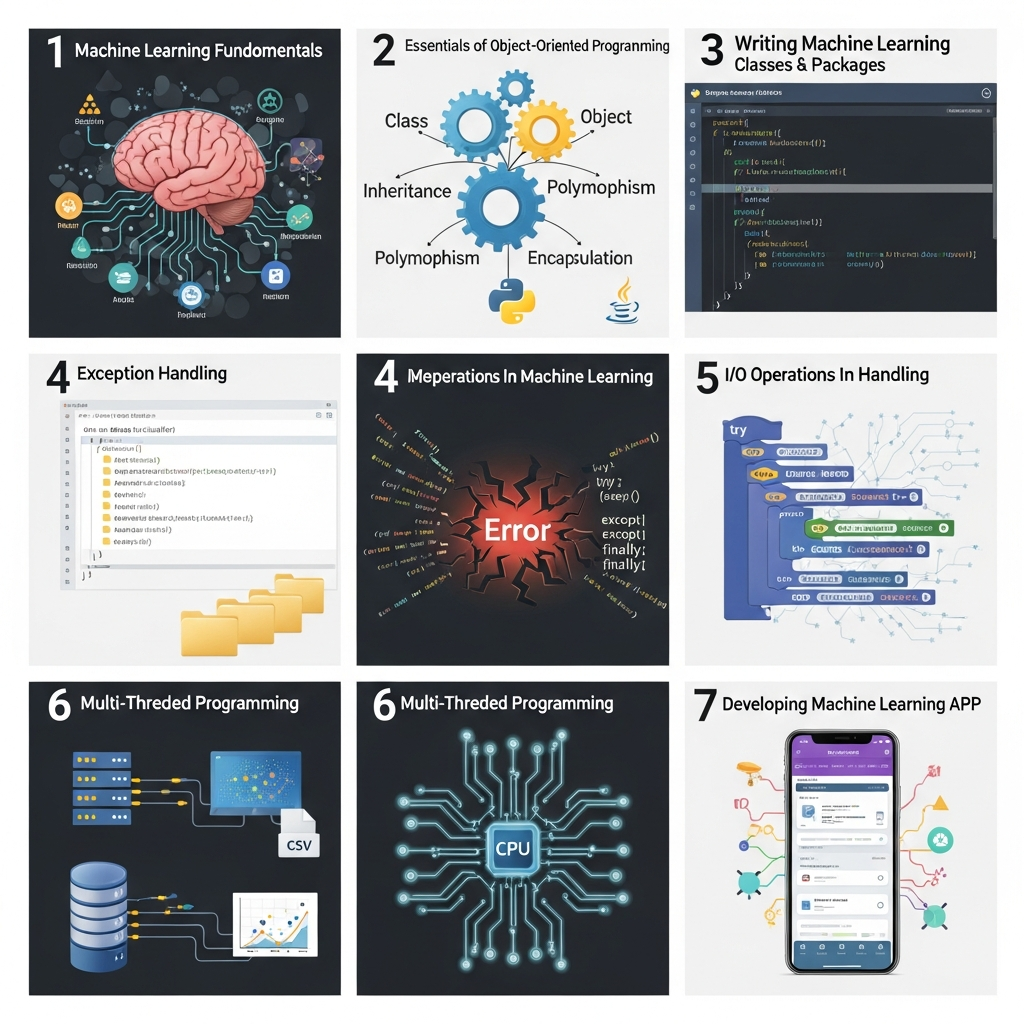
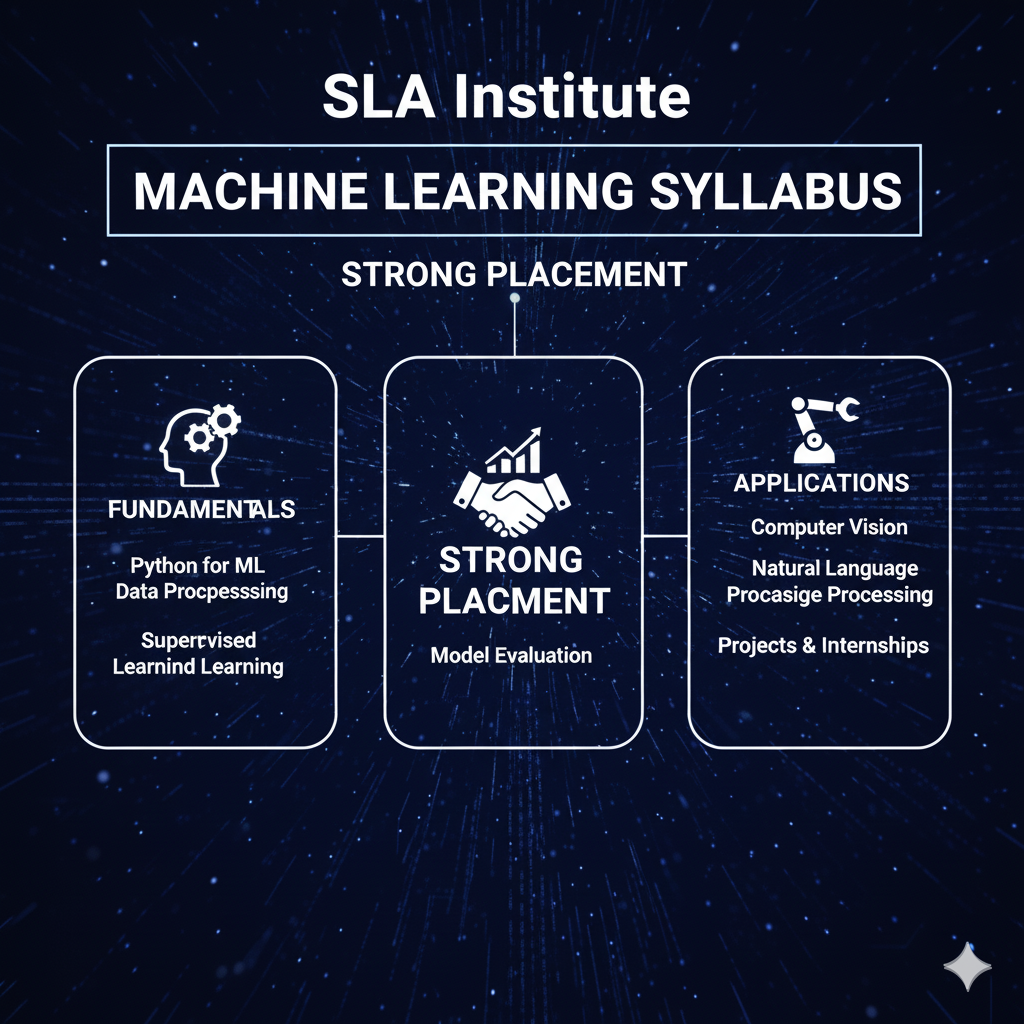
Python programming, data preprocessing, exploratory data analysis, supervised and unsupervised algorithms,
model training and evaluation,feature engineering, and deployment fundamentals are all covered in the Machine
Learning course syllabus. In order to develop machine learning abilities that are applicable to the workplace,
it places a strong emphasis on practical experience through real-world projects, case studies, and industry tools.
The Machine Learning (ML) Language Environment requires a stack that strikes a compromise between ease of deployment, library support, and performance.
READ MOREA kind of artificial intelligence called machine learning (ML) allows computers to learn from data without the need for explicit programming.
READ MOREThe paradigm of object-oriented programming, or OOP, is predicated on the idea of "objects," which comprise both code and data. By emulating real-world structures, it seeks to make software more scalable, reusable, and maintainable.
READ MOREReal-time projects and career-ready abilities were the main focus of practical machine learning courses.
READ MOREAdaptable training programs with practical instruction and real-time machine learning projects. Packages for machine learning that are reasonably priced and build useful, career-ready abilities.
READ MOREproperly managing runtime problems to guarantee seamless program execution and avoid application crashes.
READ MOREeffectively managing data input and output for ML model deployment, testing, and training.
READ MOREMultiple tasks can run concurrently thanks to multi-threaded programming, which enhances performance, efficiency, and application execution speed.
READ MORECreating production-ready It is necessary to transition from basic Jupyter notebooks to structured, scalable, and maintainable software structures for machine learning applications.
READ MOREWriting programs that use common protocols to communicate with one another via a network is known as network programming.
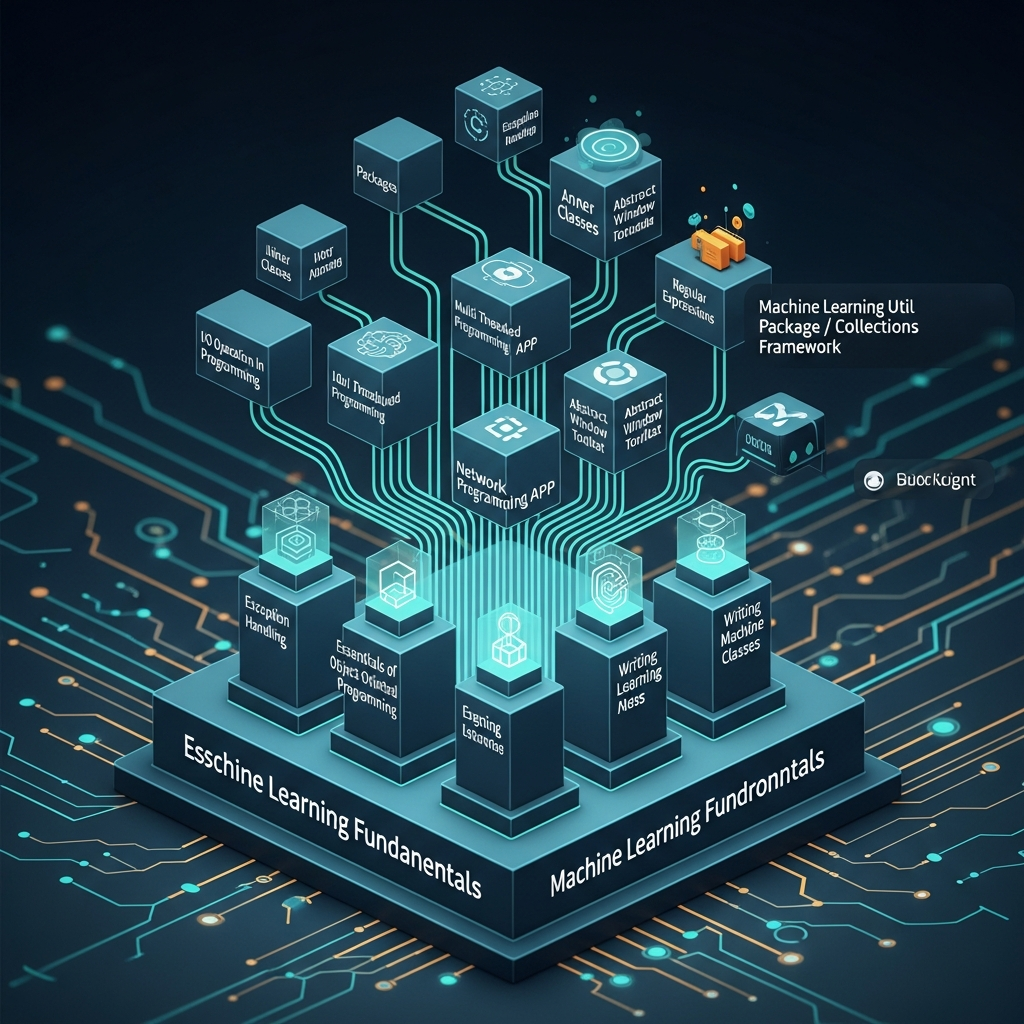
READ MORETransitioning from experimental notebooks to production-grade pipelines requires either a bespoke Collections Framework or a Machine Learning Utility Package.
READ MOREWriting classes, structures, and functions that can operate with any data type while upholding strict type safety is made possible by generics, a potent programming feature.
READ MOREInner classes, also known as nested classes, are a potent structural tool in machine learning development that are used to contain assistance functionality particular to a parent model.
READ MOREJava's first platform-independent windowing, graphics, and UI widget toolkit is called the Abstract Window Toolkit (AWT)
READ MOREA robust framework for creating Graphical User Interfaces (GUIs) is Java Swing. Swing components are "lightweight" and platform-independent because they are written solely in Java, in contrast to its predecessor AWT.
READ MOREStrong patterns called regular expressions, or Regex, are used to match, search, and work with text strings.
READ MORE